BLOG

RETROFITTING IMPROVES ORGANIZATION

Comparison of two cabinet styles, Austin style on the left with a single shelf, and Miami style on the right with two pull-out trays.

Retrofitting is a term often associated with cars where older models are fitted with newer parts. In home design, retrofitting refers to the implementation of internal components onto existing cabinetry to improve storage capacity and functionality; while it can take many forms, internal drawers, corner and garbage systems are the most popular retrofit options.

My name is Ana Maria Bernal, I am a kitchen designer, retrofitter and home organizer. In Miami, where I come from, kitchens are commonly fully fitted from the get-go but in Austin, where I reside, kitchens are often left hollow allowing for homeowners to customize them. As a retrofitter, I often meet families who struggle for years to fit and function in their spaces, so I provide them with sound, long lasting architectural solutions: as a home organizer, I evaluate content, prioritize ownership and implement storage solutions to fit the existing blueprint of the space.

Home organizers are genius when it comes to purging, probing, curating and transforming spaces by devising plans to make it all work but make no mistake, having optimum storage capacity is a game changer to them.

By Ana Maria Bernal

WHICH SIDE ARE YOU ON?

By Ana Maria Bernal

Digital illustration of a kitchen with black countertop, white cabinets, a stove with an oven, a range hood, and a blue-tiled backsplash with three blue pots on open shelves and two in sliding drawers.

Kitchen retrofitting involves installing internal drawers into existing cabinets augmenting storage capacity and accessibility. Which side of the range would you rather go to get the blue pots?


ORGANZING YOUR PANTRY? THINK LIKE A GROCERY STORE OWNER

By Ana Maria Bernal

Grocery stores are stocked based on consumer phycology and ergonomic principles. EYE LEVEL is their prime space because it allows consumers to be face to face with a product and read labels comfortably. Shelves above and below EYE LEVEL required bending down or stretching up which requires an effort some cannot or are not willing to make. Here are a few tips that could help you with this task. I am using a 5-shelf system for this blog.

A printed storage guide for a supermarket, detailing shelf organization and storage tips for various foods. It includes sections for top shelf, eye level shelf, mid eye level shelf, lower shelf, and bottom shelf, with specific instructions for storing different types of items.

Page from a book titled 'ROOMS TO GROW' by Ana Maria Bernal, describing the process of organizing a playroom for young children, including safety measures, decorating ideas, and activity areas.
Text-based article about ozempic closet tips, including size checks, the rule of three, washing and drying clothes, planning items, storage tips, and labeling everything.

SPACE PLANNING. ALL ABOUT THE POSSIBILITIES

BY ANA MARIA BERNAL

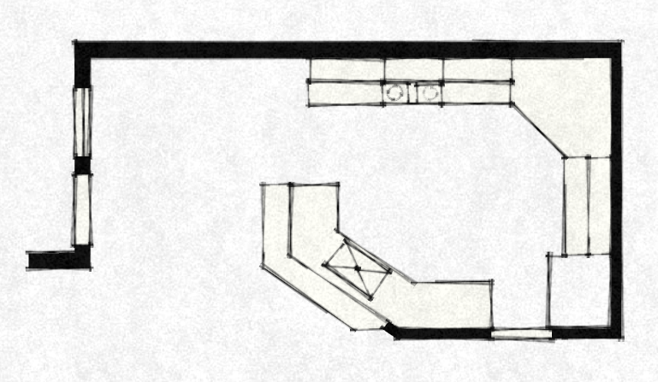
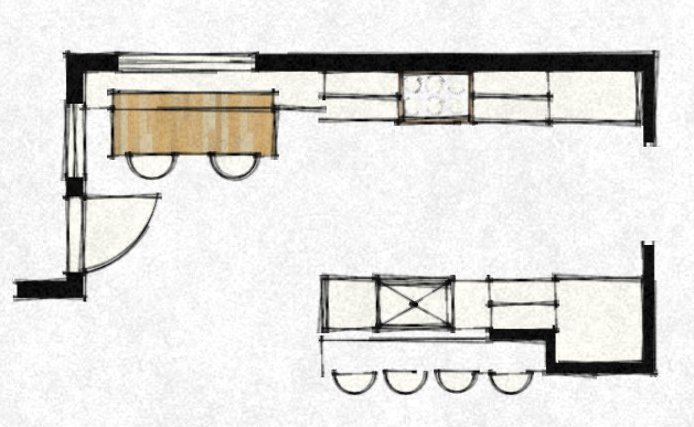
Blueprint or floor plan of a room showing walls, doors, and a built-in counter or kitchen area.
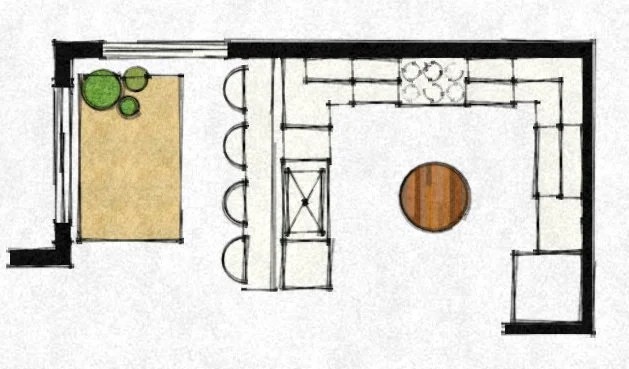
Kitchen and living area floor plan with kitchen cabinets, stove, circular dining table, small round side table, and a rug with a potted plant.
Floor plan of a small apartment with a kitchen, dining area, and entryway.
A black and white sketch of a kitchen layout with appliances and seating area, including a stove, countertop, and bar stools.
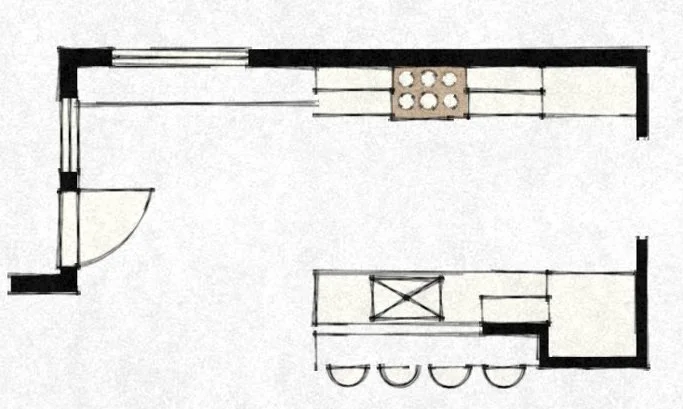
A hand-drawn floor plan of a building with rooms and corridors, including a kitchen area with four circles representing a stove or appliances.
Testimonial from Ana Maria Bernal of 305 Home Design LLC, featuring a smiling woman with glasses, earrings, wearing a hat, and a blue top, next to a blue text box with white text on a yellow background.

www.austintexas.gov/department/small-business-divsion


IS YOUR KITCHEN COMPATIBLE WITH YOUR DIET AND SHOPPING HABITS

Whether you are a vegetarian, pescatarian, flexitarian or carnivore, whether you shop in bulk at Cosco or make frequent grocery stops, your kitchen and pantry storage should reflect what you cook and how you shop.

A diet rich in animal protein requires all items to be kept cold so make sure your fridge is large and your freezer cold. Hydration is bulky and best kept cold; one fridge might not be enough for both.

If grains and legumes is what your family loves, make sure your pantry shelves are plenty and strong. Store mother earth’s eatable gold in airtight containers made of glass, bamboo and cork. Make sure you label the containers using name, date of purchase and source.

Root vegetables and eatable bulbs are the unsung heroes of the food world. Store them in well-ventilated containers in the pantry near the floor. Mixed them with bay leaves to ensure bugs don’t show.

Spices are a cook’s secret sauce. Buying them in bulk might be temping but buying them in small batches can elevate your cooking more. Small containers fit well at either side of the stove.

A healthy diet should resemble a rainbow so why not display color fruits and vegetables over the counter to elevate your decor?

A storage plan can prevent food loss. The USDA estimates that an American family of 4 wastes $1,500 worth of food every 12 months. Are you feeding your family, your disposal or making compost?

Is your storage plan compatible with your diet and shopping habits?

By Ana Maria Bernal


ERGONOMICS AND YOUR HEALTH

By Ana Maria Bernal

According to the Merriam-Webster Dictionary, ERGONOMICS is the science concerned with the design and arrangement of things, so people interact effectively and safely with them. RETROFITTING is the action of installing new or modified parts into something previously manufactured. These two concepts combined in a home setting can improve storage capacity, accessibility, comfort and ultimately your health. Here are a few medical conditions or ailments that benefit from marrying these concepts: knee replacement, ACL injuries, hip replacement, rotator cuff injury, bursitis, tendonitis, sciatica, carpal tunnel syndrome, ALS, MS, CVA, balance disorder and vertigo to name a few.


NOT ALL COLORS ARE CREATED EQUEAL

By Ana Maria Bernal

Shelf display of various M&M's chocolate candies in different flavors and packaging, including red, black, yellow, purple, brown, and blue bags, with price tags visible.
Bunches of yellow bananas on store shelves.
Close-up of multiple green and white striped melons stacked together.
Close-up of several green avocados with shiny skin, some still with small stickers attached.
Close-up of a pile of fresh oranges with stickers, displaying bright orange peels in a grocery store
Clear plastic containers of pre-cut fresh fruit on store shelves, including strawberries, pineapple, cantaloupe, honeydew, grapes, and watermelon.

Supermarkets are full of colorful objects which represent different health choices. On your next visit start at the produce section and pick as many healthy and colorful items as you can. Since fresh produce does not come with lists of ingredients to read, take as much time as you need to plan your menu for the week before moving to the protein section and finally visit the center isles with intention not temptation. If your children are with you, remind them that a healthy diet should look like a rainbow full of bright and beautiful colors.